
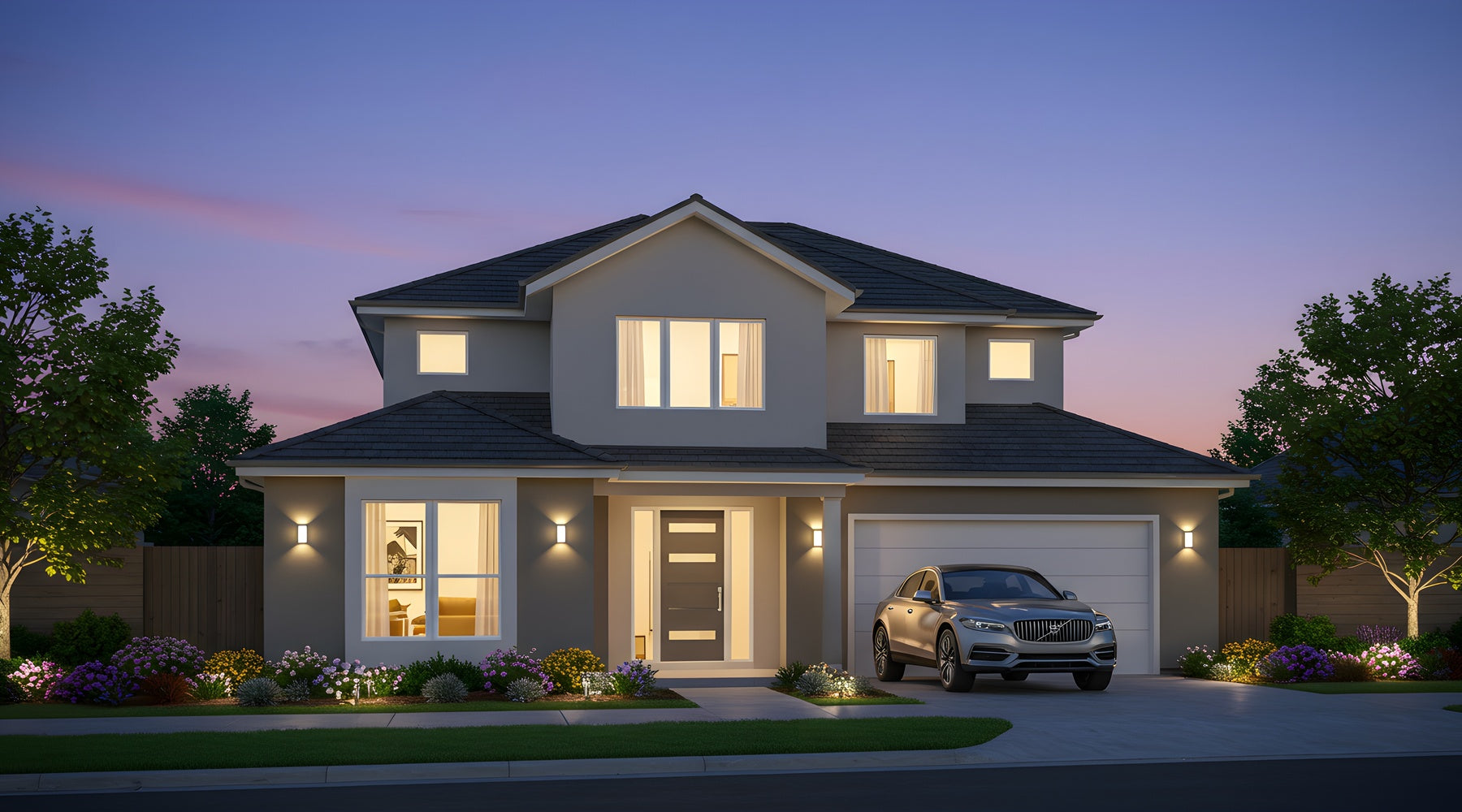
Streetlights in the neighborhood won’t brighten the driveway or entryway, and they definitely won’t do anything for the backyard. Instead of coming home to a pitch-black property, add lights that add a warm glow. Outdoor lights will sharpen the home’s appearance while making it safe. From architectural accents to motion sensor lights, here’s how to layer a few lights for a refined setup.
Floodlights
Floodlights produce an expansive beam of light. They’re ideal above the garage and along the side entrances. Since these lights are so powerful, there’s no need to install more than a few. Positioning each one in the appropriate place will cover vulnerable zones instead of washing the whole property in a harsh glare.
Pick fixtures with a warm white temperature instead of cold blue light. Warm tones flatter brick, wood, stone, and painted siding, so the house looks expensive instead of interrogated. After aiming each fixture, test it out! If the lights blind you from the driveway or sidewalk, switch the angle.
Path Lights
Tripping over a step or a fallen flower pot after you get home is never a warm welcome. Path lights make it easy to navigate the yard.
Towering posts and oversized fixtures that scream for attention aren’t the right fit for sophisticated designs. Low-profile lights tailor the look near stone edges, brick borders, and sleek lawn lines.
The best path lights for safe walkways create a rhythm instead of runway-strip drama. Stagger fixtures along curves, tuck them near planting beds, and space them consistently. The light will flow along the path instead of bouncing from bright to dim. With these lights in place, you and your guests will reach the front door without missing a step.
Motion Sensor Lights
Motion sensor lights used to carry a certain bargain-bin energy. Now they look sleek, respond fast, and fit neatly into a modern exterior. Install them near side yards, dark corners, detached garages, and back doors where activity should trigger attention right away.
A motion sensor should act like a good security detail: alert, precise, and never dramatic for no reason. Set the sensitivity so the fixture reacts to a person on foot rather than every drifting branch in a light breeze. Pairing these lights with a smart system gives you fast alerts and stronger control, especially if you’re interested in installing invisible home security technology without turning your home into a fortress cosplay set.
Use fixtures that match the property’s exterior hardware. It may seem like an insignificant detail, but the thoughtful choice will pull every element together.
Solar-Powered Lights
Solar works best as accent lighting rather than your main line of defense. It adds texture and depth by filling visual gaps. The lights work amazingly along garden edges, around sheds, beside fences, and near mailbox posts.
Cheap versions will fade fast and wobble through the night, but high-quality solar fixtures deliver clean accent light in spots where wiring would be a nuisance. Choose solar lights with durable finishes and strong battery performance. If not, you’ll end up with a yard full of dim little disappointments by the end of the season. The style should echo your home’s architecture, whether that means streamlined metal, classic lantern shapes, or understated black finishes.
Step and Rail Lighting
Step lights and handrail lights solve one of the biggest outdoor design failures: stairs that vanish after sunset. Recessed step lights sharpen each tread, while rail lighting traces the route with a crisp line that looks sharp on porches, decks, and garden steps.
These fixtures shine the brightest in places with elevation changes. They frame the architecture, support safe movement, and add a custom-built touch that many homeowners chase during renovations.
Keep the brightness modest. The goal isn’t to spotlight every step like a theater aisle. You want clean visibility and a refined glow that complements the entire lighting plan.
Statement Entry Lights
Now that you won’t trip when walking up the driveway and walkway, the entryway needs to transform into a stylish, warm welcome home. Entry lighting should anchor the facade and set the tone right away. Sconces on both sides of the door balance the space. An overhead pendant works beautifully on covered porches with ample ceiling height.
Before buying the first attractive light you find, think about the entryway’s scale. Tiny fixtures look timid, and oversized ones overwhelm the architecture. Match the size of the light to the height of the door, the width of the trim, and the visual weight of the porch. Every time you approach the porch, you’ll have attractive and functional lights to greet you.
Architectural Accent Lights
Now that the property has cohesive lights and is much safer than before, it’s time to incorporate some accent lights. These lights show off the parts of your home worth noticing. Maybe it’s a stone column, a mature oak tree, a textured wall, or stunning landscaping that deserves a little drama after dark. Use uplights, downlights, or directional spotlights to highlight the features.
Just like with the floodlights, the use of accent lights works best with restraint. Too many focal points will compete with each other and look like a mess from the street. A single uplight on a tree with strong branching structure will look far better than six scattered beams with no real plan. Pick a few standout elements and light them up!
Deck and Patio Illumination
Backyard lighting should support the way you live. Deck lights, under-cap lights, pergola fixtures, and patio string lights will shape the mood. However, you don’t need them all.
Take a look at your backyard’s features and layout. Then, think about how you and your guests use the space. A blend of task and accent lighting is ideal. Considering these factors will help you decide which lights will influence the space best.
Build a Sophisticated Lighting Setup
A safe and stylish home should have layered outdoor lights. You’ll create clear routes, strong visibility, and sharp architecture that every guest and passerby notices.
Take a walk around your property after sunset, and pay attention to what disappears or looks flat in the dark. You’ll be able to devise a thoughtful lighting plan that complements the home and your style.
Share:
The Backyard Essentials for Hosting Family and Friends
10 Strategies To Get Rid of Clutter and Free Up Space