
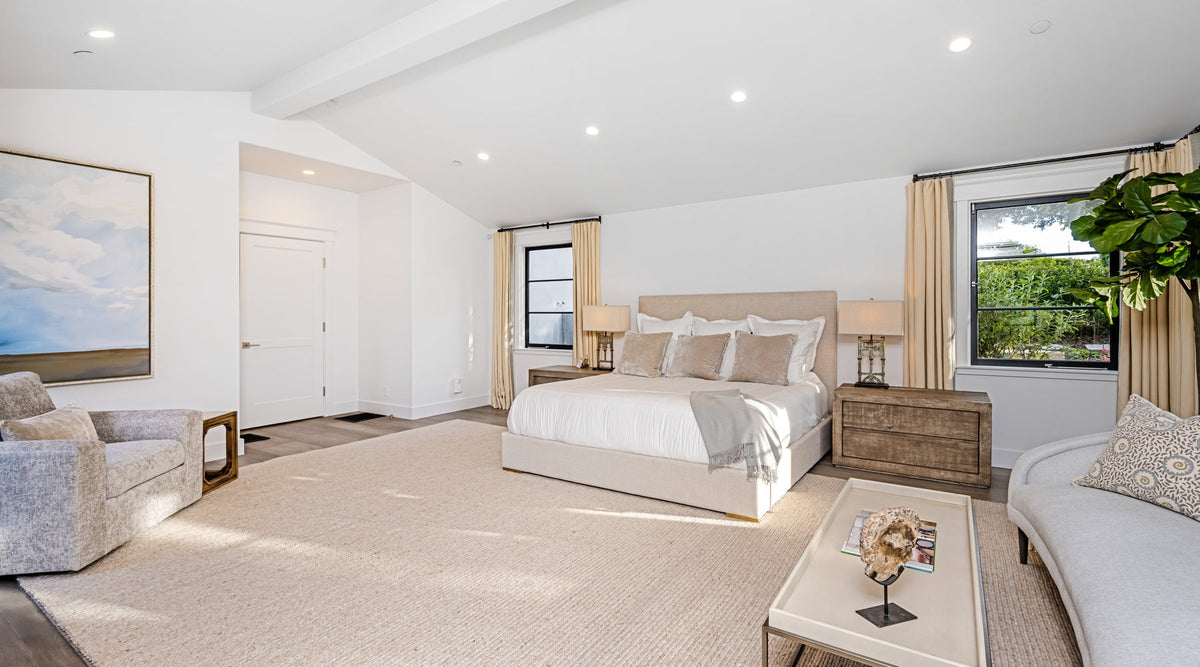
A bedroom has one job that outranks showing off your taste: giving your brain somewhere to power down. Piles of clothes, crowded surfaces, harsh lighting, and a bed buried beneath decorative pillows all introduce visual noise at the exact point in the day when you want less stimulation. Intentional design brings order to those details without turning the room into a sterile hotel suite. The most effective relaxing bedroom design choices combine personal style with a layout that makes getting ready, winding down, and finding what you want straightforward.
Limit the Bedroom Color Palette
Color influences how busy a room appears before you account for furniture or accessories. If the bedding introduces four colors, the rug adds three more, and the artwork heads in another direction entirely, the room starts asking your eyes to process too much at once. A refined palette gives those elements a visual connection, which produces a calm overall impression.
Choose two or three primary tones, then repeat them through bedding, window treatments, artwork, or accents. Navy with warm brown creates a grounded combination, while charcoal paired with cream brings contrast without looking severe. Olive, muted blue, rust, and natural wood tones offer personality without turning the bedroom into a color wheel demonstration. You don’t have to match every shade precisely; repetition is enough to make the room appear intentional.
Put Fewer Pillows on the Bed
A well-dressed bed sets the tone for the entire room because it occupies so much visual space. Start with sheets and a comforter or duvet that suit the room’s palette, then introduce texture through a quilt, throw, or fabric with a subtle weave. Layering gives the bed depth without relying on loud patterns or a pile of decorative extras.
Pillows are where restraint pays off. Two sleeping pillows per person and one or two accent pillows provide structure without creating a nightly relocation project. If twelve pillows have to move to the floor before you get into bed, the styling has started working against the purpose of the room. A simple arrangement still looks finished, and resetting the bed in the morning takes very little effort.
Give Self-Care Products Display Space
Grooming products become visual clutter when every bottle, jar, watch, and cologne competes for the same stretch of countertop. Instead of hiding absolutely everything, decide which items deserve display space based on how frequently you use them and how they contribute to the room. A shallow tray on a dresser or bathroom counter gives daily products a defined boundary for a curated setup.
A cologne collection works well in this type of arrangement because fragrance bottles already have strong visual appeal. You could pair a few favorite scents with a watch tray, neatly arranged skincare, or a small jewelry box, then store backup products and occasional-use items elsewhere. Keeping fragrances away from direct sunlight and significant heat changes protects the contents, while placing everyday grooming essentials within reach makes the routine less scattered. The result brings a bit of luxury to getting ready without introducing clutter.
Choose One Wall for Statement Art
Artwork gives a bedroom personality without occupying useful storage or walking space. The key is deciding where the strongest visual moment belongs instead of spreading equal amounts of decoration across every wall. Above the bed or across from the doorway usually offers enough visual prominence for one substantial piece or a small coordinated grouping.
When making art the focal point of the room, leave nearby areas relatively quiet so the main piece has room to command attention. A large photograph, graphic print, abstract work, or framed concert poster becomes far more effective when it isn’t battling three other gallery arrangements. That balance lets the room express personality without surrounding the bed with constant visual activity.
Use Bedside Lamps After Dark
Ceiling lights are useful when choosing clothes, cleaning, or trying to locate the sock that mysteriously vanished behind the dresser. They’re less appealing when you’re preparing to sleep. A bright overhead fixture floods the entire room with light, so shifting to a bedside lamp in the evening changes the atmosphere without requiring a major redesign.
Choose lamps that illuminate enough space for reading or moving around safely without blasting the entire room. Warm-toned bulbs generally suit bedrooms because their softer appearance works well with an evening routine. If outside lighting reaches the windows at night, blackout curtains or lined shades can cut down on unwanted brightness. During the day, opening those coverings brings natural light back into the space and prevents the bedroom from remaining dim around the clock.
Reserve the Nightstand for Bedtime
A nightstand works best when the objects on top actually belong to the bedtime routine. Receipts, loose coins, unopened mail, charging bricks, and yesterday’s coffee cup have a habit of gathering beside the bed because it’s a convenient surface. Unfortunately, convenience turns into clutter quickly.
Limit the top to items you regularly use before sleeping or immediately after waking, such as a lamp, water glass, alarm clock, or current book. Route charging cords behind the table or place them in a small cable organizer. Anything unrelated to sleep or the morning routine belongs in a drawer or somewhere else in the room. Waking up beside an orderly surface gives the day a calm opening scene.
Organize Clothes Around Your Routine
A crowded closet creates friction when getting dressed because too many choices are competing in a limited space. Shirts disappear behind jackets, accessories migrate between drawers, and the belt you actually want somehow winds up beneath three belts you haven’t worn since college.
Group shirts, pants, jackets, and footwear by type. Then, store frequently worn pieces where they are easy to see. Watches, belts, cuff links, and other small accessories benefit from a dedicated drawer insert or valet tray. Organization works best when it reflects what you reach for regularly rather than following an elaborate system you’ll abandon in two weeks.
Leave Sections of the Room Undecorated
Empty space is a design choice. Covering every wall and dresser with decorative objects creates visual competition, even when each individual piece looks good. A room intended for rest benefits from pauses between its strongest details.
Leave part of the dresser visible around grooming displays, and resist putting artwork on every available wall. One chair in a corner has a purpose; three baskets, a floor plant, a side table, and a decorative ladder beside it probably have an intervention coming. Open areas give the eye somewhere to rest.
Design the Room Around Winding Down
A dramatic renovation isn’t necessary for the room to become a calm, functional space. Intentional design choices will make your master suite feel like an oasis. When everything has a purpose and the room reflects your taste, relaxing stops competing with the surroundings.


Share:
8 Underrated Hobbies Every Guy Should Try at Least Once