
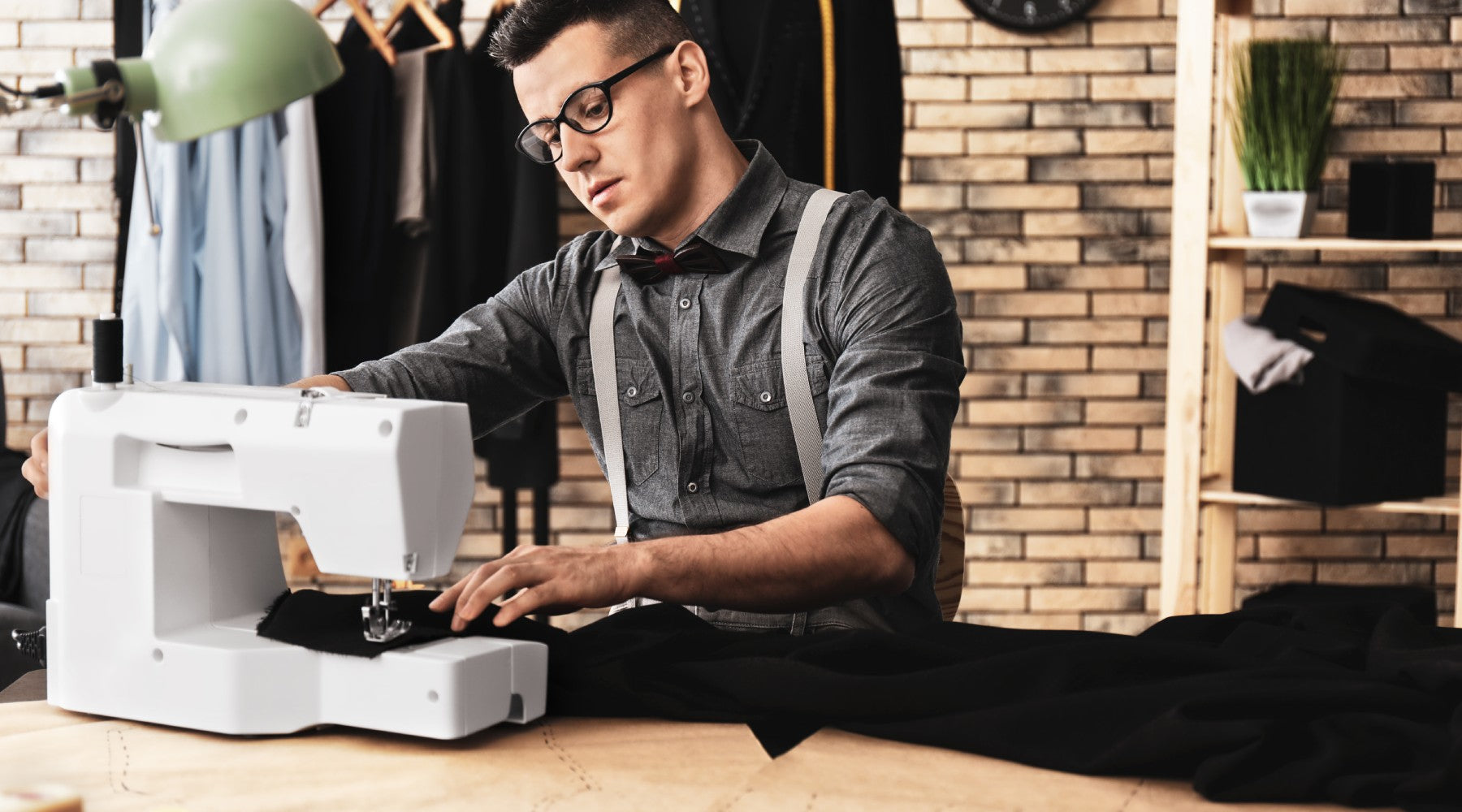
There is a distinct, undeniable confidence that comes from wearing a garment that truly fits. You stand taller, and you project an image of success. Most men chase this feeling by spending exorbitant amounts of money on high-end labels or visiting expensive tailors. While those are valid avenues, a growing number of style-conscious men are realizing they can achieve that same level of sartorial excellence with their own two hands. We are witnessing a renaissance in menswear where craftsmanship is king, and the barrier to entry is simply a needle and thread.
If you appreciate the engineering of a fine watch or the lines of a classic car, you already possess the mindset required for tailoring. You are merely applying that appreciation for detail to the drape of a jacket, the taper of a trouser leg, the structure of a collar, and the tension of a seam. Read on to explore why more men are starting to sew and how you can get in on the hobby yourself.
The Benefits of Learning To Sew
Once you understand how a garment is constructed, you look at clothing completely differently. Likewise, when you master the sewing machine, you unlock the full potential of your personal style. Let’s explore the key benefits that all men can reap by learning to sew.
You Can Make Clothes That Fit You Perfectly
Ready-to-wear clothing is designed for a statistical average that rarely exists in reality. Most men have physical quirks that mass manufacturing ignores, such as one shoulder sitting lower than the other, an athletic build with a narrow waist, or arms that are slightly longer than standard sizing. Learning to sew allows you to alter existing garments or create new ones that respect your specific anatomy.
You can take a boxy, uninspired shirt and dart it to accentuate your V-taper. You can hem trousers to the exact break you prefer, whether that is a full break, a half break, a quarter break, or no break at all. Furthermore, you can adjust sleeve lengths to show the perfect amount of cuff. This capability grants you the power to look impeccable in everything you wear. Essentially, you stop compromising on fit and start demanding perfection from your wardrobe.
You Get Complete Creative Control in Your Style
When you shop at a store, you are limited to the buyer’s selection for that season. If you want a heavy linen shirt in olive drab with horn buttons, a spread collar, French cuffs, and a specific chest pocket design, you will likely never find it on a rack. Sewing gives you the agency to be the designer.
Additionally, this skill set opens the door to replicating high-end runway looks for a fraction of the cost. You can add side tabs to trousers, swap out cheap plastic buttons for mother-of-pearl, change the lining of a jacket to something bold, and more. The result is a one-of-a-kind piece that tells a story only you can articulate.
You Can Ditch the Fast-Fashion Dumpster Cycle
We live in an era of disposable clothing where items are designed to fall apart after a few months. Building your own wardrobe allows you to opt out of this wasteful cycle. When you make a garment, you can spend the time it takes to craft something durable.
Moreover, you gain the ability to repair and maintain your clothes properly. Instead of discarding a favorite pair of jeans because of a hole, you can perform a sashiko repair or turn them into tool pouches (one of many DIY style hacks that sewing skills enable). You can also patch moth holes in sweaters, restitch raveled seams, replace worn-out zippers, and re-dye faded fabrics.
You Develop a Hobby That’s Good for Your Brain
Sewing forces you to focus and disconnect from digital distractions. You must pay attention to the tension of the thread, the speed of the needle, the grain of the fabric, and the measurement of the seam allowance.
This clears the mind. It is tactile problem-solving. Much like woodworking or restoring an engine, the satisfaction comes from seeing raw materials transform into a functional, beautiful object through your own effort.
How To Get Started in Sewing
Entering the world of sewing does not require a massive investment, but it does require the right tools and a willingness to learn. You should approach this just as you would any other trade: by buying decent equipment and committing to the process.
Get a Sewing Machine
First, acquire a reliable sewing machine. You do not need a computerized model with hundreds of decorative stitches you will never use. Instead, look for a heavy-duty mechanical machine that can handle layers of denim, canvas, wool, and leather. Older, all-metal vintage machines are excellent for this, as they are built like tanks and are easy to maintain.
Buy Your Other Supplies
Next, build your toolkit. You will need the following:
- fabric shears (that you never use on paper!)
- glass-head pins that won’t melt under an iron
- a clear acrylic ruler
- a seam ripper
- tailor’s chalk
- a variety of hand and machine sewing needles.
Take a Class
Then, focus on your education. YouTube is a fantastic resource, but nothing beats hands-on instruction. Look for local workshops or community colleges that offer introductory courses. Try to pick a sewing class that will prepare you for your project goals, whether that’s garment construction, tailoring, or crafts. These courses will teach you the fundamentals of reading a pattern, understanding grainlines, finishing edges, and so much more.
Start Sewing
Finally, take on a project, but make it manageable. Do not attempt a three-piece suit as your first endeavor. Start with a tote bag to learn straight lines. Move on to a simple apron to understand straps and pockets. Then, try making a pair of pajama pants to grasp the concept of fitting a 3D body with 2D fabric. Once you master the basics, you can progress to button-down shirts and eventually trousers and everything else in your dream wardrobe.
Conclusion
The modern gentleman is a man of capability. He understands that style is not something you buy but something you cultivate. By picking up a needle and thread, you are reclaiming a tradition of craftsmanship that has defined men’s style for centuries. You are rejecting the mediocrity of mass production in favor of the excellence of the bespoke.
It requires patience, practice, and a steady hand. However, the reward is a closet full of clothes that fit your body, express your personality, and stand the test of time. That is why men are starting to sew and why you should consider joining them. It is the ultimate power move in a world of fast fashion.
Share:
Home Additions To Improve Property Value Before Selling
Effective Strategies to Future-Proof a Custom Home